Table of Contents
The newest free global IPTV is not a playlist but a self-refreshing cloud platform: a standalone app whose offshore servers and planetary CDN deliver 20,000+ live channels from every time zone plus a daily-updated 4K VOD library to Firestick and Android TV—$0 monthly, 99.9% uptime, no M3U files, no card.
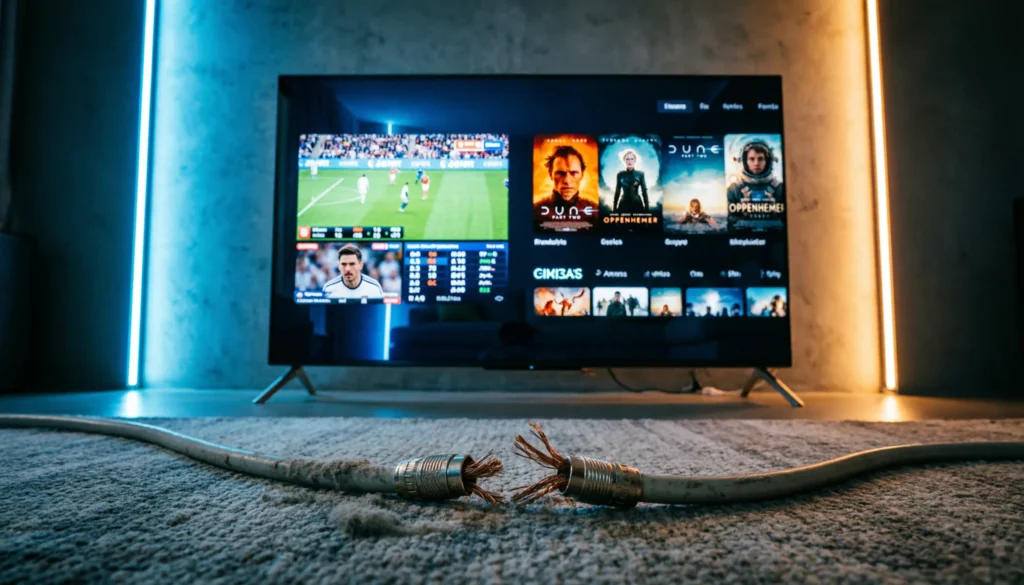
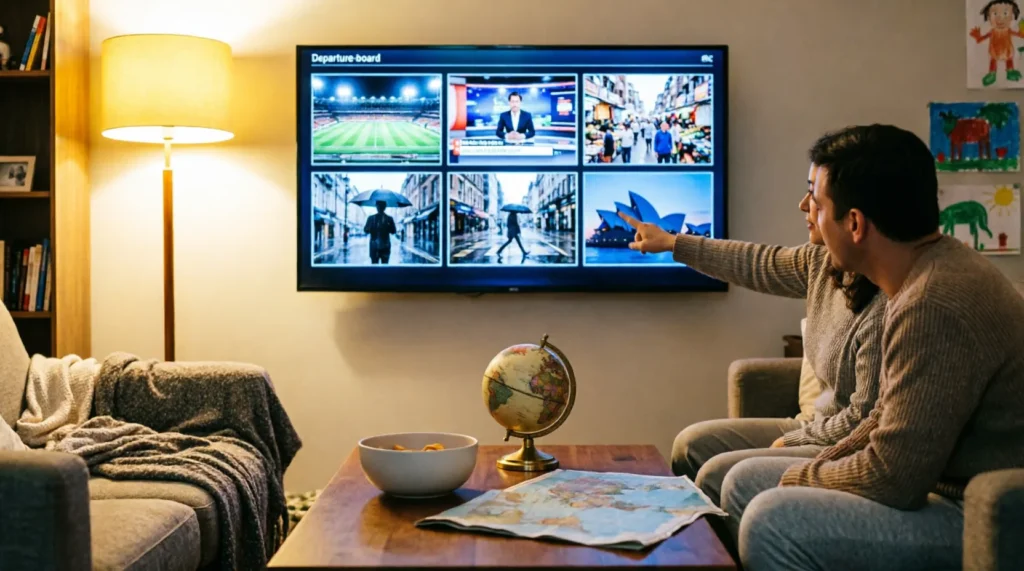
At any given second, it is prime time somewhere. Tokyo is waking to news desks; Lagos is settling into midday drama; London is queuing the evening match; New York is pouring wine over a series finale; Sydney is already asleep inside a documentary. A television that deserves the word global holds all of those primes at once, and a television that deserves the word newest refreshes them faster than the world changes—new reels daily, healthy rotations nightly, guides synchronized while you sleep. The search query newest free global iptv is therefore two demands in one: freshness and planet-scale reach, delivered for nothing. Scraped playlists fail both demands by physics; legacy cable fails both by business model. The demand is only answered by a newest free global IPTV platform—a standalone, cloud-based application whose managed backend servers treat the entire planet as one refreshable grid, and whose monthly fee is zero by architecture, not by promotion.
This boarding manual covers the whole route: why local pipes cannot carry a planet, why the scraped atlas tears at its seams, the infrastructure that refreshes faster than the world changes, twelve time zones on one screen, a day around the world from a single sofa, the three-move boarding procedure, and the gate questions answered before departure.
Local Lines Can’t Carry a Planet
Cable was built as a domestic utility, and its geography never escaped the franchise map. The bundle is a walled garden of national feeds: the international rack is a token shelf of three diaspora channels, the sports package blacks out precisely the matches expats want, and the movie rotation arrives seasons after the world has moved on. Then the tolls: the bundle keypad priced like a car payment for a dozen watched channels, the box rental leasing you your own hardware, the broadcast fee and regional surcharge printed in font size six, the promotional cliff at month thirteen. Cable cannot be global because its business is scarcity with borders, and it cannot be newest because its schedule is set by committees that meet quarterly.
The Scraped Atlas Tears at the Seams
The DIY alternative promises the planet in a text file, and delivers a map with half the countries missing. An M3U playlist is a plain-text list of scraped stream addresses pasted into a generic player, and scraped infrastructure decays fastest at the edges—exactly where global content lives.
The testimony is consistent across every collected log. Host servers rotate addresses and tokens daily, producing the 24-hour crash: Friday’s working atlas becomes Saturday’s wall of gray tiles, and the international feeds—already the rarest links—die first. Overloaded hosts buffer at the exact second of the away match, because a scraped pipe has one lane and an unlimited audience spanning every time zone at once. The electronic program guide rusts into wrong times and blank slots across half the world’s zones, because a leak has no maintenance department in any of them. And the labor invoice arrives weekly: hunt the link, paste it, test tile by tile, rebuild the guide, repeat. The monetary cost is $0; the true cost is every Saturday spent redrawing a map that was born tearing. A playlist is not a globe. It is a postcard with a buffering wheel on the back.
The New Infrastructure: A Grid That Refreshes Faster Than the World Changes
The genuine platform inverts the geography. It is a compiled, standalone application that connects directly to managed backend servers, and every burden the scraped era dumped on users—rotation, token refresh, dead-stream surgery, guide synchronization across dozens of regions—executes server-side, continuously, invisibly. You never paste. You never refresh. You open the app, and the planet is already current.
The Daily Refresh: How “Newest” Is Maintained
Freshness here is a maintenance schedule, not a slogan. The VOD library acquires new movie and series reels daily, on every region’s shelf at once. Channel rotation removes failing infrastructure and replaces it with healthy equivalents overnight, without a human action in any living room. Guide data synchronizes server-side across time zones, so the Tokyo morning grid and the New York evening grid are both correct at the same instant. What you evaluated last month is not what you open tonight—the platform is permanently the newest thing in the room.
The Planetary Mesh: How “Global” Is Engineered
Reach here is topology, not marketing. Streams originate on offshore servers whose traffic signatures domestic ISP throttling fails to recognize, so the prime-time throttle never wakes up in any country you watch from. A global CDN network replicates every feed across edge nodes on multiple continents and hands your device the nearest healthy one, switching invisibly when a node hiccups—an away match hosted on one continent arrives steadied on another. Anti-buffer technology keeps a reservoir of pre-fetched segments seconds ahead of playback, absorbing dips in memory before they reach the glass. Resolution holds at 4K and FHD through the final minute, in every zone, every night.
The ledger that makes the planet affordable: 50,000+ active users across regions amortize enterprise infrastructure until the household bill becomes unnecessary—$0 monthly fees, no card field, no trial countdown, no premium tier. 99.9% server uptime is held by redundant nodes and automatic failover, so maintenance happens before any screen, anywhere, can flicker.
“People ask which country the service lives in, and it is the wrong atlas. It lives in the mesh—intake offshore, delivery everywhere, refresh continuous. The sun never sets on the grid, and more importantly, neither does the maintenance window.” — Head of Global Operations, FREE IPTV CHANNELS
Twelve Time Zones on One Screen
Depth without organization is a warehouse, so the atlas is shelved the way households actually travel. Browse the worldwide channel atlas of 20,000+ live feeds and you move through twelve districts, each curated, plus the daily-refreshed VOD wing:
- Live Sports — league nights on every continent, combat cards, motorsport weekends, and the overseas feeds domestic packages blackout.
- Latest Movies — theatrical newcomers and catalog classics from every market, added daily, served without pre-roll ads.
- Premium TV Series — complete seasons in order, commercial-free, episodes arriving on schedule worldwide.
- Adult Content — the restricted district, strictly PIN-protected and invisible without your code.
- Live News — domestic and international 24-hour coverage, from capital bureaus to global wire desks.
- Documentaries — nature, history, true crime, and science strands in multiple languages.
- International — the flagship district: diaspora broadcasting in dozens of languages, from European public networks to Latin American, Asian, Middle Eastern, and African staples.
- Kids & Family — a walled, age-safe shelf that never leaks mature tiles into the main grid.
- Music & Arts — concert feeds, video blocks, and gallery programming from every scene.
- Gaming & Tech — esports tournaments, hardware channels, and builder culture across regions.
- Lifestyle & Food — cooking, travel, home, and design from kitchens on five continents.
- Drama & Comedy — the syndicated backbone of comfortable background television, local and imported alike.
The restricted district behaves the only acceptable way in a shared household: PIN-protected, and stronger still, invisible. Without the code you set, the category appears in no menu, no search result, no recommendation rail. Locked is common. Invisible is engineered.
A Day Around the World in One Living Room
The atlas is best proven the way travel is best proven—an itinerary. One household ran a single evening as a round-the-world trip, remote in hand:
- 19:02, boarding — Deployment complete in 4 minutes 12 seconds; grid current on first open, every district lit.
- 19:15, Tokyo morning — A news desk six time zones ahead, crisp FHD, correct guide data for a broadcast that started before the household’s dinner.
- 20:00, Lagos midday — Drama shelf switched mid-episode with zero handshake delay; the reservoir absorbed a Wi-Fi blink nobody noticed.
- 21:00, London kickoff — 4K sport through the peak window; buffer column zero while the domestic throttle slept.
- 22:30, New York finale — A series episode that landed on the VOD wing this week, not last season; no pre-roll, no rental fee.
- 23:45, Sydney winds-down — A nature documentary in the international rack, the same feed an expat cousin watches on another continent.
- 00:10, audit — Overnight rotation observed: two channels swapped to healthy equivalents while the house slept. Weekly tally in green: zero buffer events, zero dead tiles, zero maintenance minutes, zero dollars.
Boarding Procedure: The Three Moves

No computer. No phone tethered by cable. No USB talisman. The boarding runs on the stick, with the stick’s own remote, in three moves and under five minutes.
Move 1 — Fetch Downloader and Open the Panel
Install Downloader by AFTVnews from the device store, the community-standard utility for sideloading serious software. Then open the permission panel the manufacturer built into the firmware: on Firestick, Settings → My Fire TV → Developer Options → Install Unknown Apps (older firmware labels it “Apps from Unknown Sources”); on Android TV, Settings → Security & Restrictions → Unknown Sources. This is not a jailbreak. It is the owner of a computer exercising a printed permission.
Move 2 — Enter the Quick Code
Open Downloader and face the URL bar. You will not type an address. The platform publishes a short numeric code—collect the boarding quick installation code from the homepage or the official guide before you sit down—and the digits resolve straight to the correct build for your hardware. No long strings to mistype, no mirror sites to vet, no guesswork. Type, go, watch the bar fill.
Move 3 — Install, Open, and Tear Up the Paper Ticket
The code triggers the auto-download of the APK. Choose Install, then Open to see the atlas light up already current. Final move, the one veterans never skip: return to Downloader’s file list and delete the APK file. The application lives on your device now; the installer is a paper ticket taking up storage your stick needs for smooth operation. Purge it. Keep the pocket empty. A frame-by-frame walkthrough, including every firmware variant and common hiccup, lives in the full three-move boarding guide.
Multi-zone note: There is no hardware binding and no per-device surcharge. Every Firestick and Android TV in the house boards at the same $0 fare—including the one in the guest room where the in-laws watch their own hemisphere. Seat every screen.
Gate Questions: Answered Before Departure
1. What does “global” actually cover? Dozens of languages and every major broadcasting region—European publics, Latin American staples, Asian and Middle Eastern networks, African broadcasters, and the diaspora shelves between them. The international district is a flagship, not a token.
2. How “new” is the newest? New reels land on the VOD wing daily; rotations and guide sync run nightly. The platform is permanently the freshest thing on your wall—freshness is a schedule, not a launch-week accident.
3. Does boarding require a card or an email? No payment field, no registration wall, no trial countdown. Download, install, open. $0 is the structure, not the promotion.
4. My ISP throttles streaming at night. Will international feeds suffer? Peak windows are precisely what offshore origination, the planetary CDN mesh, and the anti-buffer reservoirs were built to defeat. The throttle hunts recognizable signatures; your traffic does not present one.
5. How much bandwidth does the atlas need? Roughly 10–15 Mbps steady for FHD and about 25 Mbps for comfortable 4K, ideally over 5 GHz Wi-Fi or ethernet. The reservoir forgives brief dips that freeze generic players.
6. Is the restricted district truly invisible without the PIN? Measured, not promised. Without your code, the category appears nowhere—no tile, no search hit, no accidental recommendation.
7. Can devices in different rooms watch different hemispheres at once? Every Firestick and Android TV you own runs the same $0 fare with no hardware binding. Two screens, two continents, one household, zero surcharge.
8. Will Fire OS or Android TV updates break the app? The client is standalone and self-updating through its cloud backend. Operating system updates and channel rotation are separate universes; one does not vandalize the other. Edge cases are documented in the global setup and coverage dossier.
Final Call: The Sun Never Sets on This Grid
Read the route one last time and the original query boards itself. Newest free global iptv? Not from the domestic toll road that prices you as a captive and blacks out the planet. Not from the scraped atlas that tears at the seams and bills you in Saturdays. You board the self-refreshing mesh: offshore intake that leaves every throttle asleep, a planetary CDN that never drops pressure on any continent, anti-buffer reservoirs that hold 4K steady through the final whistle in every zone, 20,000+ live channels and a daily-refreshed VOD wing across twelve organized districts, 99.9% uptime, 50,000+ passengers already seated, and a fare that reads zero on every leg, forever.
The world is already prime time somewhere. Take the permanent first-class seat on the grid, run the three-move boarding tonight, and let the next blackout land on somebody else’s hemisphere.