
Table of Contents
The fastest answer to how do you get IPTV for free is a standalone, cloud-based IPTV application that refreshes its own channel list—no M3U links, no subscriptions, no manual updates. On Firestick or Android TV, three steps do it: install Downloader, enter the quick code, launch and watch.
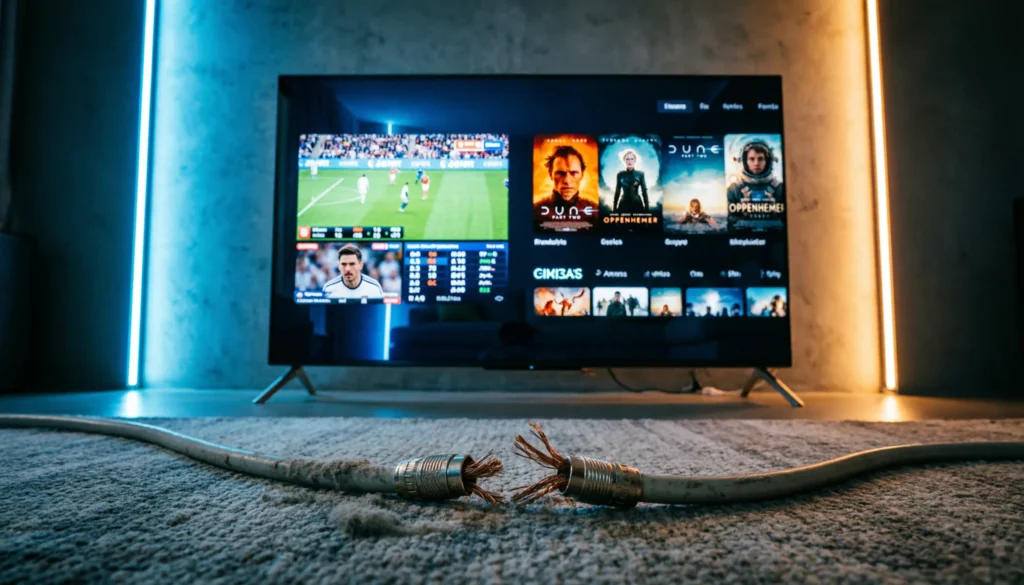
There is a specific moment every cord-cutter remembers. The statement arrives, the “promotional period” has quietly died, and the number at the bottom is thirty-four dollars higher than the one you originally signed. You flip to the single channel you actually watch, and it has been migrated into a “premium tier.” That night, the search bar receives the question: how do you get IPTV for free? Not a seven-day trial that silently memorizes your card. Not a “discounted” bundle. Genuinely, permanently free television delivered over the internet.
Here is the good news: it exists in 2026, and it no longer resembles the janky playlist hacks of five years ago. The modern answer is a free auto-updating IPTV application that talks directly to its own backend servers, repairs its own channel list while you sleep, and bills you exactly nothing—ever. More than 50,000 active users already run it, server uptime holds at 99.9%, and the monthly fee line reads $0 because there is no monthly fee.
What follows is the complete, no-filler briefing: why cable broke the household budget, why M3U playlists are a trap disguised as a gift, what a genuine cloud-based IPTV platform looks like under the hood, and the exact three-step installation ritual for Firestick and Android TV.
The Great Cable Exodus: Why How Do You Get IPTV for Free Became the Loudest Question in Television
Cable didn’t lose its customers. It priced them out of loyalty. The average household now pays for one hundred and fifty-plus channels and watches, by every honest measure, fewer than a dozen. The rest is ballast—shopping networks, duplicate feeds, reruns priced like premieres. Stack the regional sports surcharge on top of the broadcast fee on top of the box-rental line item that multiplies like rabbits, and the “cheap package” is a folk tale.
So the question changed shape. A few years ago people searched for cheaper cable deals. Then they asked how to split streaming subscriptions across cousins. Now the query is blunter: how do you get IPTV for free, on hardware you already own, without inheriting somebody else’s broken playlist? That shift is the entire cord-cutting movement compressed into one sentence. Professionals who bill their time by the hour refuse to hand an hour back to a cable invoice. Firestick owners realize the dongle in their HDMI port is a full computer. Android TV users discover their set-top box runs a standalone IPTV client more happily than it ever ran a cable app.
The appetite arrived first. The only problem was delivery—and for years, delivery meant M3U chaos.
M3U Playlists: The Bait That Turns Free IPTV Into an Unpaid Part-Time Job

Search the old way and you will drown in “.m3u” files—plain-text channel lists scraped from forums, pasted into players, and prayed over. For a day, maybe two, it feels like genius. Then the bill comes due, and it is paid in frustration.
The 24-Hour Shelf Life of a Free Playlist
A scraped playlist is a photograph of a server that has already moved. Streams rotate addresses, tokens expire, hosts vanish. That is why the classic symptom is the 24-hour crash: the playlist that worked at midnight becomes a wall of gray tiles by the next evening. You did nothing wrong. The file was born dying.
Buffering, Black Screens, and the Manual Update Treadmill
Even a live playlist is usually an overloaded one. Hundreds of strangers hammering a single unmanaged host means your championship match buffers at the exact second of the winning play. Then comes the treadmill: hunt a fresh link, paste it into the player, re-map the guide, repeat weekly. People call this “free IPTV.” It is a subscription paid in labor instead of money—and the labor never ends.
Why a Playlist Was Never a Product
Here is the uncomfortable truth: an M3U file is a leak, not a service. Nobody maintains it, nobody answers for it, nobody upgrades it. The moment you understand that, the question how do you get IPTV for free stops being about finding a file and starts being about finding an infrastructure.
The Cloud-Based Fix: Anatomy of a $0 IPTV Platform That Updates Itself
The architecture that actually solves the problem removes the playlist from your hands entirely. Instead of handing you a text file, a serious platform hands you a standalone, cloud-based application that connects straight to managed backend servers. Channel rotation, token refresh, dead-stream surgery—all of it happens server-side, invisibly, continuously. You never paste a link. You never refresh a list. The app simply opens tomorrow with every channel still alive.
This is the model behind our premium cord-cutting solution: a self-healing client backed by a global CDN network, engineered so a user base of 50,000-plus experiences 99.9% uptime while paying $0 in monthly fees.
A Channel Grid That Reads Like a Wish List
Volume matters only when it is organized. The library runs past 20,000 live channels, sorted into shelves a human being can actually browse:
- Live Sports — match-day feeds, combat nights, motorsport weekends, and the overseas sports channels domestic packages never carry.
- Latest Movies — a VOD library updated daily, not quarterly.
- Premium TV Series — current seasons and deep catalogs, in order, without promos.
- Adult Content — fully PIN-protected, invisible until a household chooses otherwise.
- Live News — domestic, international, and 24-hour business coverage.
- Documentaries — nature, history, true crime, and science strands.
- International — diaspora channels in dozens of languages, from Europe to Asia to Latin America.
- Kids & Family — a walled, safe shelf for younger viewers.
- Music & Arts — concert channels, video boxes, gallery programming.
- Gaming & Tech — esports, reviews, and builder culture.
- Lifestyle & Food — cooking, travel, home, and design.
- Drama & Comedy — the scripted backbone of every good TV night.
4K, FHD, and the Anti-Buffer Engine
Resolution is a promise only the network can keep. Streams are served in 4K and FHD, and the anti-buffer technology pre-compensates for congestion before it ever reaches your screen. The clever part sits upstream: offshore servers route around the throttling patterns domestic ISPs apply to recognized streaming signatures, while the global CDN hands your stream to the nearest healthy edge. The result is the thing M3U users never experience—a final that stays fluid in the final minute.
“The moment a service ships playlist files to the customer, it has shipped a liability. The only zero-cost architecture that survives is server-side curation with client-side silence—the app should know everything and display nothing.” — Streaming Infrastructure Lead, FREE IPTV CHANNELS
Proof Over Promises: The Numbers That Separate a Service From a Scraped File
Skepticism is healthy. “Free” has been a dirty word in streaming for a decade, so here is the scoreboard, plainly:
- 50,000+ active users — a community large enough to sustain serious infrastructure.
- 99.9% server uptime — the backend is engineered like a production service, because it is one.
- $0 monthly fees — no card at signup, no trial that mutates into an invoice.
- 20,000+ live channels — plus a movies-and-series VOD library refreshed daily.
- 4K & FHD delivery — through anti-buffer routing on a global CDN.
Every line above is a direct rebuttal to the playlist era: where a file gives you nothing after the download, a platform gives you a maintenance crew you never see.
What’s the Catch? Confronting the Skeptic in the Room Head-On
Ask it out loud, because you are thinking it: if it’s free, who pays? The honest answer is scale. Infrastructure shared across tens of thousands of users costs fractions of a cent per stream; growth itself funds the pipes, the same way every major ad-free ecosystem of the last decade learned to do it. There is no premium tier waiting to upsell you, no invoice hiding behind day thirty. The platform stays alive by staying large, and you stay at $0 by staying installed. Your only job is to delete the APK after installation and never think about it again.
Field Test: One Week on the Wrong Side of the Cable Bill
Monday opens with live news on the big screen while coffee happens. Tuesday belongs to the Kids & Family shelf, sealed away from everything else. Wednesday is sports night—the feed that used to buffer at the worst possible second now holds FHD through stoppage time. Thursday runs a premium series, three episodes, zero promos. Friday closes with a movie that landed in the VOD library this week, not last season. Saturday is the international rack: the channels of somebody’s childhood, in the right language, on a sofa three time zones from home. Sunday coasts on documentaries until everybody falls asleep mid-narration. Seven days, twelve categories, one remote—and not a single playlist pasted anywhere.
The Three-Step Ritual: Installing on Firestick & Android TV in Under Five Minutes
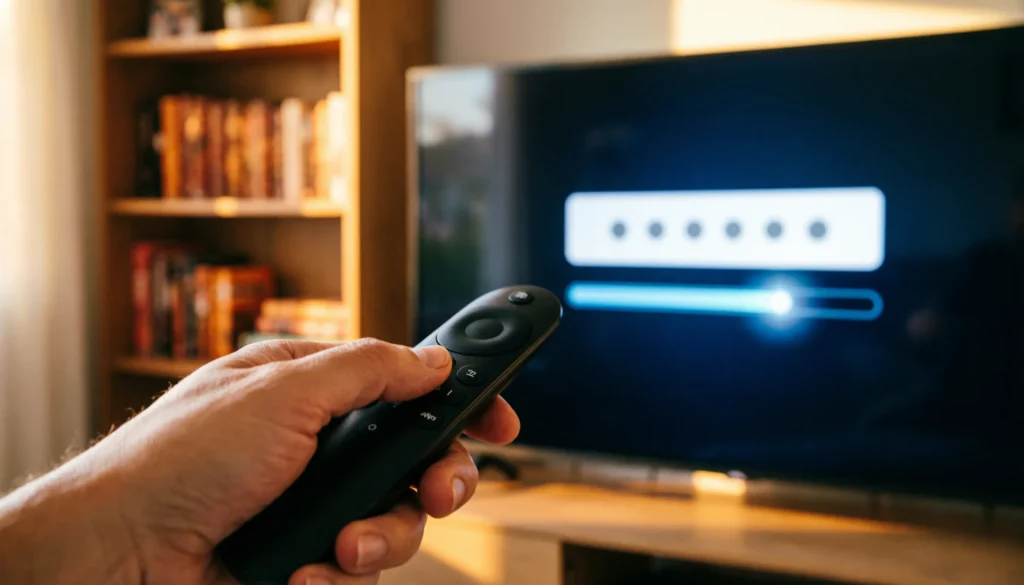
No sideloading odyssey. No computer required. No APK hunting through forums. The entire installation collapses into three moves, and you will never need to repeat them—because the app updates itself forever after.
Step 1 — Install Downloader by AFTVnews and Unlock Unknown Sources
On Firestick, open the app store and fetch Downloader by AFTVnews, the standard-bearer for sideloading. Before it can fetch anything for you, grant permission: head to Settings → My Fire TV → Developer Options and switch on Install Unknown Apps (older firmware labels it “Apps from Unknown Sources”). Android TV users make the same allowance under Settings → Security & Restrictions → Unknown Sources. Ninety seconds, tops.
Step 2 — Punch In the Quick Code
Open Downloader. Instead of typing a long address, you enter a short quick code into the URL field. Where does the code live? It is published on our homepage and inside the installation guide, so grab the quick installation code before you sit down in front of the TV. One entry, one tap, and Downloader is pointed at exactly the right build for your device.
Step 3 — Auto-Download, Install, and Delete the APK
The code triggers an automatic download of the APK. When the prompt appears, choose Install, then Open. Now the move everybody forgets: return to Downloader and delete the APK file. The application is already installed; the leftover installer is dead weight eating your TV’s storage. Delete it and your setup is surgically clean.
That is the whole ritual. From search to first channel, most users clock in under five minutes.
Living With Free IPTV: Bandwidth, Households, and the After-Dark Rules
A few practical notes from the field. For FHD, a steady 10–15 Mbps connection behaves beautifully; for 4K, give it 25 Mbps and keep the TV on 5 GHz Wi-Fi or, better, ethernet. Households with children get a dedicated Kids & Family shelf, while the adult shelf stays sealed behind its PIN—two separate worlds, one interface. Expats discover the international rack is the quiet killer feature: the channels of home, one click from a sofa on another continent.
Straight Answers: Your “How Do You Get IPTV for Free” Questions, Settled
1. How do you get IPTV for free without a credit card or a trial that expires? You install the standalone application and nothing else. There is no card field, no seven-day countdown, no invoice waiting behind the trial curtain. $0 means $0.
2. Do I need an M3U URL or an Xtream Codes login? No. That is the entire point. The app connects directly to managed backend servers, so there is no playlist to paste, no code to renew, and nothing to expire at 3 a.m.
3. My ISP throttles streaming. Will this survive that? The offshore server architecture is built for exactly that. Streams do not present the signatures domestic throttling systems look for, and the global CDN serves you from the nearest healthy edge.
4. Which devices does the three-step guide cover? Firestick (all generations) and Android TV are the headline acts, and the same APK logic carries to Android-based boxes generally. If your device runs the Downloader app, you are in range.
5. How current is the movie and series library? The VOD library is updated daily. “Latest” is not a seasonal claim here; it is a maintenance schedule.
6. Is the adult content actually locked away? Yes—PIN-protected by default. The shelf is invisible and unreachable without the code you set, which is exactly what a household with children needs.
7. What internet speed do I need for 4K? Plan on 25 Mbps downstream for a comfortable 4K feed. FHD behaves superbly from around 10–15 Mbps.
8. When channels rotate, do I have to do anything? Nothing. Rotation, repair, and refresh happen server-side. You open the app; the app is already current.
The Verdict: Your Couch, Your Rules, and a $0 Line Where the Bill Used to Be
Circle back to the original question and it answers itself with unusual clarity. How do you get IPTV for free? You stop collecting files and start running a platform. Cable trained you to pay for ballast. Playlists trained you to work for scraps. A cloud-based, auto-updating application trains you for neither: 20,000+ live channels, a daily-refreshed movie and series library, 4K and FHD through anti-buffer routing, 99.9% uptime, 50,000+ active users, and a monthly fee that does not exist.
The couch is yours. The remote is yours. As of tonight, so is the television. Claim your free setup and put the cord-cutting debate permanently to rest.