Table of Contents
How to get IPTV channels free: enroll your Firestick or Android TV in a cloud-managed streaming platform instead of renting cable or babysitting M3U playlists. The standalone app connects to offshore servers, self-updates 20,000+ live channels and daily 4K VOD, and charges $0 tuition—99.9% uptime, no manual lessons, ever.
Every industry has a favorite kind of customer, and the cable monopoly’s favorite is the uneducated one—the household that has never itemized its own statement, never audited its own watching, never asked what the box in the living room actually is. That is why the question how to get iptv channels free behaves like an enrollment form: the moment you ask it seriously, you have already walked out of the audience and into the classroom. This article is that evening class. No prerequisites, no textbooks, no tuition—ironically, since tuition is exactly what we are abolishing.
The curriculum covers three lectures and one lab. Lecture One itemizes the fees you currently pay for scarcity. Lecture Two exposes the “scholarship” that is actually unpaid labor. Lecture Three explains the endowed model that makes genuine $0 television structurally possible. The lab session installs the zero-tuition IPTV platform on your Firestick or Android TV in three moves, and office hours close the night with straight answers. Take a seat. The bell just rang.
Lecture One — The Tuition You Are Already Paying
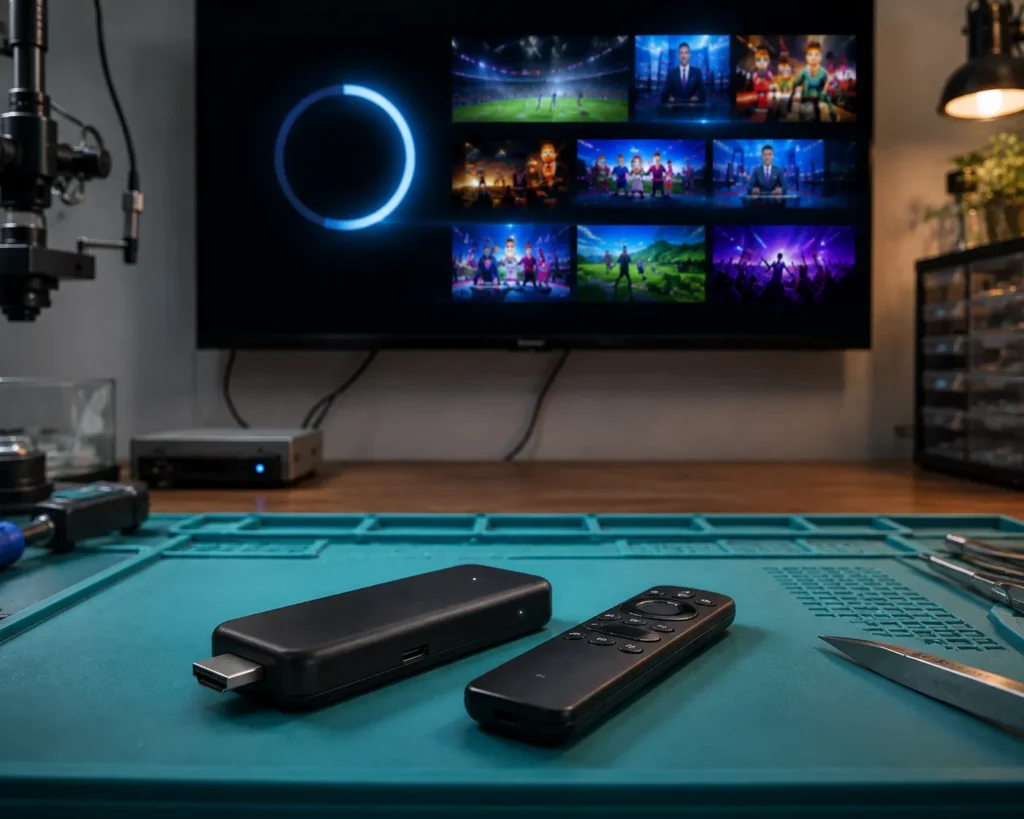
Read a cable statement the way a bursar reads a fee schedule, and the extortion stops being abstract. The bundle is the base tuition: one hundred and fifty-plus channels priced like a car payment, of which an honest household watches a dozen. The set-top box rental is the equipment fee—a monthly lease on hardware the provider purchased years ago and will replace never. The broadcast fee and the regional sports surcharge are lab fees charged for labs you never enter. And the promotional cliff at month thirteen is the annual tuition hike, delivered with a smile and a retention script.
Now audit attendance. Track a week of real viewing and the number that surfaces is humiliating: roughly a dozen channels actually watched, the rest ballast—shopping loops, duplicate feeds, reruns priced like premieres—required courses you never attend but must fund. Cable is an overpriced scam not merely because the number is high, but because the number buys scarcity: blackouts on the biggest matches, schedules dictated by the provider, a guide padded to justify the arithmetic. You are not paying for television. You are paying for the privilege of renting a toll road.
Lecture Two — The Scholarship Scam: Work-Study on Scraped Playlists
The DIY escape route presents itself as a full ride: paste an M3U playlist into a generic player and watch the same channels for nothing. Examine the syllabus and you discover the catch. The playlist is a plain-text list of scraped stream addresses, and scraped infrastructure carries a built-in expiration. Host servers rotate addresses and tokens daily to dodge detection and shed load, which produces the infamous 24-hour crash: Friday’s working grid becomes Saturday’s wall of gray tiles. You did nothing wrong. The scholarship was stale when awarded.
Then come the brownouts. Hundreds of strangers hammering one unmanaged host means the feed buffers at the exact second of the final whistle—peak demand is when you most want power and exactly when the bootleg setup fails. Then the homework arrives: hunt a fresh link at midnight, paste it, test tile by tile, rebuild the electronic program guide when it rusts into wrong times and blank slots, repeat weekly. The monetary invoice reads $0; the true invoice is every Saturday you spend keeping the lights on. A leak has no maintenance department, and a playlist is a leak. This is not a scholarship. It is a work-study program where the work is real and the pay is television that keeps breaking.
Class note: Any method that requires you to paste a link, refresh a list, or rebuild a guide is not a product. It is unpaid employment with a buffering wheel for a supervisor.
Lecture Three — The Endowed Model: How $0 Tuition Is Structurally Possible
Skepticism is the correct posture in this subject, so here is the endowment explained plainly. The genuine platform is a standalone, cloud-based application that connects directly to managed backend servers—the way a campus connects to a power station instead of a borrowed generator. Every task the playlist era dumped on households executes server-side, continuously, invisibly: channel rotation, token refresh, dead-stream surgery, guide synchronization. You never paste. You never refresh. You open the app, and the app is already current.
The published figures read like an accredited institution because accreditation is the point. 50,000+ active users are enrolled, a scale that amortizes enterprise infrastructure until the household bill becomes unnecessary. 99.9% server uptime is held by redundant nodes and automatic failover. $0 monthly fees is the tuition line, and it is architecture rather than promotion—no card field, no trial countdown, no premium tier waiting to upsell you after commencement.
The delivery stack is the faculty that makes the grade. Streams originate on offshore servers whose signatures domestic ISP throttling fails to recognize, so the prime-time throttle never wakes up. A global CDN network replicates each stream across edge nodes and hands your device the nearest healthy one, switching invisibly when a node hiccups. Anti-buffer technology keeps a reservoir of pre-fetched segments seconds ahead of playback, absorbing network dips in memory before they can reach the glass. Resolution holds at 4K and FHD through the final minute—the minute scraped playlists always lose.
“Students keep asking whether their stick is powerful enough, and the question reveals the old misunderstanding. The socket does not need to be a power station. When intake, distribution, and reserves live in the fleet, the living room device goes back to being a window—and windows never need upgrades.” — Department Chair of Streaming Infrastructure, FREE IPTV CHANNELS
The Course Catalog: Twelve Departments and a Restricted Archive
Depth without organization is noise, so the endowment is shelved the way households actually study. Browse the full catalog of 20,000+ channels and you move through twelve departments, plus a daily-refreshed VOD library of movies and series that acquires new titles on a maintenance schedule rather than a seasonal promise:
- Live Sports — league nights, combat cards, motorsport weekends, and the overseas feeds domestic packages blackout.
- Latest Movies — theatrical newcomers and catalog classics, added daily, served without pre-roll ads.
- Premium TV Series — complete seasons in order, commercial-free, episodes arriving on schedule.
- Adult Content — the restricted archive, documented below.
- Live News — domestic and international 24-hour coverage without padded affiliate breaks.
- Documentaries — nature, history, true crime, and science strands for slow evenings.
- International — diaspora broadcasting in dozens of languages, from European public networks to Latin American and Asian staples.
- Kids & Family — a walled, age-safe department that never leaks mature tiles into the main grid.
- Music & Arts — concert feeds, video blocks, and gallery programming.
- Gaming & Tech — esports tournaments, hardware channels, and builder culture.
- Lifestyle & Food — cooking, travel, home, and design.
- Drama & Comedy — the syndicated backbone of comfortable background television.
The restricted archive behaves the only acceptable way in a shared household: PIN-protected, and stronger still, invisible. Without the code you set, the department appears in no menu, no search result, no recommendation rail. Locked is common. Invisible is engineered.
Lab Session — The Three-Move Practicum
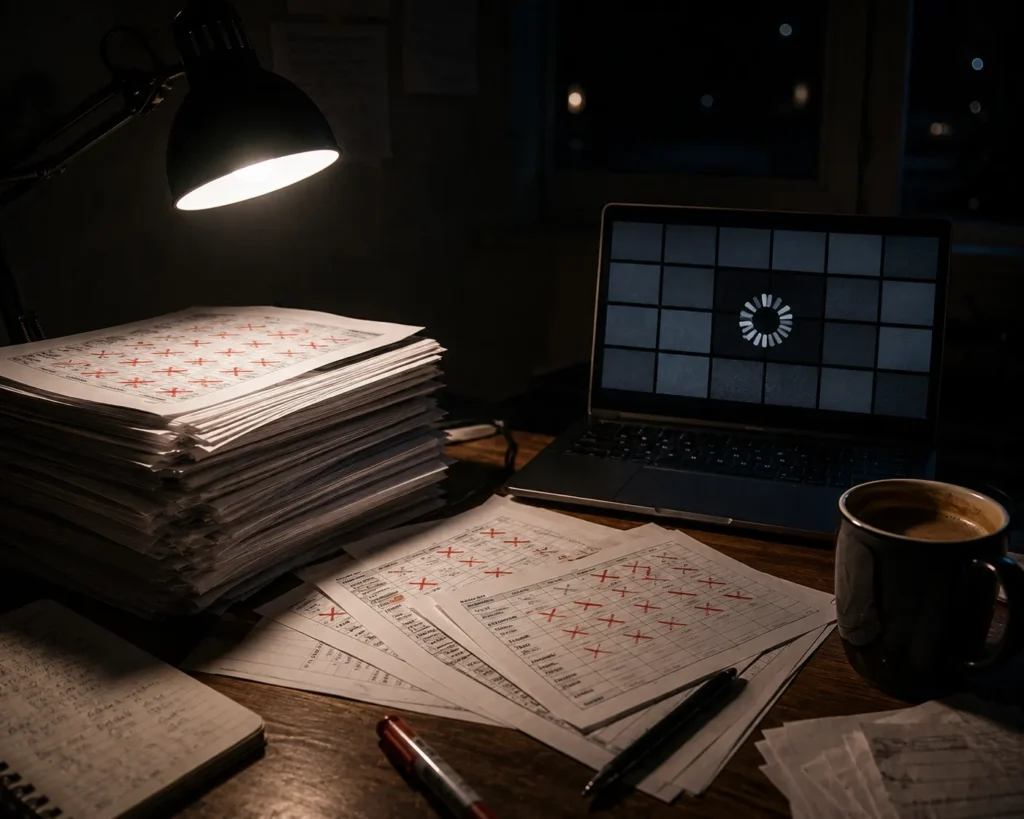
Theory ends here. The practicum runs on the stick, with the stick’s own remote, in three moves and under five minutes—shorter than one cable commercial break. No computer, no phone tethered by cable, no USB talisman.
Move 1 — Fetch Downloader and Open the Permission Panel
Install Downloader by AFTVnews from the device store, the community-standard utility for sideloading serious software. Then open the panel the manufacturer built into the firmware: on Firestick, Settings → My Fire TV → Developer Options → Install Unknown Apps (older firmware labels it “Apps from Unknown Sources”); on Android TV, Settings → Security & Restrictions → Unknown Sources. This is not a jailbreak. It is the owner of a computer exercising a printed permission.
Move 2 — Enter the Enrollment Quick Code
Open Downloader and face the URL bar. You will not type an address. The platform publishes a short numeric code—collect your enrollment quick code from the homepage or the official guide before you sit down—and the digits resolve straight to the correct build for your hardware. No long strings to mistype, no mirror sites to vet, no guesswork. Type, go, watch the bar fill.
Move 3 — Install, Open, and Shred the Worksheet
The code triggers the auto-download of the APK. Choose Install, then Open to see the grid light up already current. Final move, the one veterans never skip: return to Downloader’s file list and delete the APK file. The application lives on your device now; the installer is a completed worksheet taking up storage your stick needs for smooth operation. Purge it. Keep the desk clear.
Lab note: There is no hardware binding and no per-device surcharge. Every Firestick and Android TV in the house enrolls at the same $0 tuition. Seat the whole classroom.
Office Hours — Questions Students Actually Ask
1. Is the tuition really $0, forever, without a card? Yes. No payment field, no registration wall, no trial countdown converting into an invoice. Zero is the structure, not the promotional semester.
2. Do I need prior credits—technical skill, a computer, a phone? None. The entire practicum runs on the stick with its own remote. The computer stays in the office; the phone stays in your pocket.
3. Will the syllabus change without me noticing? It changes constantly, and that is the feature. Rotation and repair execute server-side, so the catalog you open is always the catalog the fleet considers healthy at that moment. Your only homework is none.
4. What bandwidth prerequisite does the 4K seminar require? About 25 Mbps downstream for comfortable 4K; 10–15 Mbps serves FHD superbly. Feed the stick 5 GHz Wi-Fi or ethernet and the reservoir forgives the rest.
5. Is the restricted archive truly invisible without the PIN? Measured, not promised. Without your code, the department appears nowhere—no tile, no search hit, no accidental recommendation.
6. Will Fire OS or Android TV updates break my enrollment? The client is standalone and self-updating through its cloud backend. Operating system updates and channel rotation are separate universes; one does not vandalize the other.
7. Are there ads injected between the lectures? No mid-match detergent breaks, no pre-roll before movies. The streams arrive as produced; a thousand household logs would confirm the silence.
8. My ISP throttles streaming during peak hours. Will I suffer it during finals? Peak windows are precisely what the offshore intake, CDN mesh, and anti-buffer reservoirs were built to defeat. The throttle hunts recognizable signatures; your traffic does not present one.
“I kept a playlist for two years and I can tell you the exact cost: every Saturday morning of that period. The app gave me those mornings back. That is the whole review.” — Graduate of the evening class, household of five
Commencement — The Diploma Is a Remote in Your Hand
Three lectures, one lab, and the original question grades itself. How to get iptv channels free? Not by staying enrolled in the monopoly that prices you as a captive. Not by accepting the scholarship that prices you as its mechanic. By joining the endowed model: offshore intake that leaves throttling asleep, a global CDN that never drops pressure, anti-buffer reservoirs that hold 4K steady through the final whistle, 20,000+ live channels and a daily-refreshed VOD library across twelve organized departments, 99.9% uptime, 50,000+ classmates, and a tuition line that reads zero forever.
The cable company hopes you skip this class. The playlist forums hope you fail it and come back to hunting links. Graduation, it turns out, takes five minutes: claim your permanent cord-cutting diploma, run the three-move practicum tonight, and let the next tuition hike land on somebody else’s statement.